





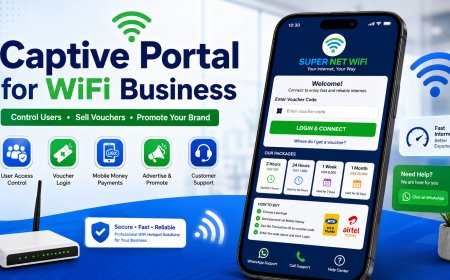

Best WiFi Voucher Pricing Strategies for a Profitable Hotspot Business
Learn the best WiFi voucher pricing strategies for a profitable hotspot business. Discover how to set hourly, daily, weekly, and monthly packages.

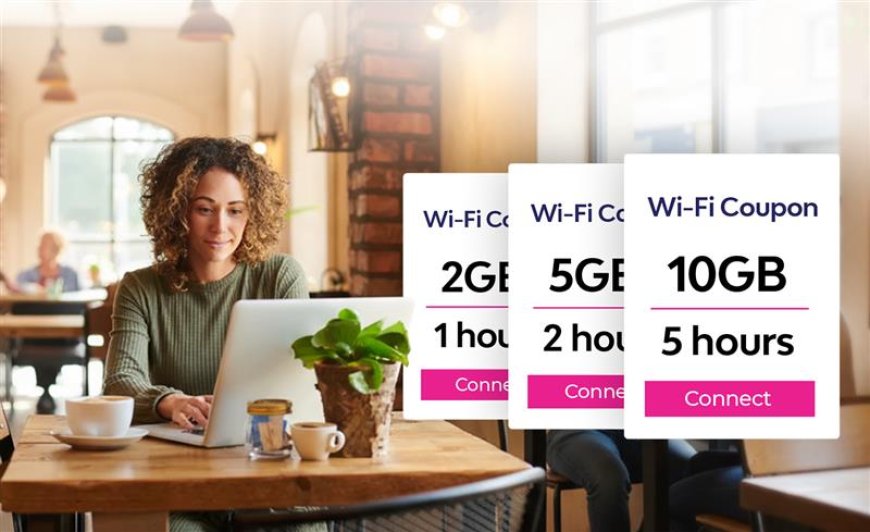
Best WiFi Voucher Pricing Strategies for a Profitable Hotspot Business
Starting a WiFi hotspot business is a good idea, but one of the most important things you must get right is pricing. Your internet may be fast, your login page may look beautiful, and your WiFi coverage may be strong, but if your prices are not well planned, the business can struggle.
Good pricing helps you attract customers, cover your internet costs, pay agents, maintain equipment, and still remain with profit. Bad pricing can bring many users but very little money, or it can make customers run away because the packages look expensive.
In this guide, we shall explain how to create smart WiFi voucher prices from start to finish.
1. Why WiFi Voucher Pricing Is Very Important
WiFi voucher pricing is the foundation of your hotspot business. It decides how much customers pay, how long they browse, and how much profit you make.
Many hotspot owners make the mistake of copying prices from other people without understanding their own costs. This can be dangerous because your internet cost, location, number of users, equipment, and competition may be different.
For example, someone in a busy student hostel can sell many small vouchers every day. But someone in a quiet village may need different packages because customers may buy less often.
Your pricing should match your area, your customers, your internet cost, and your business goals.
2. Understand Your Costs First
Before setting prices, you must first know how much money you spend every month.
Common costs include:
| Cost Item | Example |
|---|---|
| Internet subscription | UGX 150,000 – 500,000+ |
| Electricity | UGX 20,000 – 80,000 |
| Router maintenance | Depends |
| Access point maintenance | Depends |
| Agent commission | Depends |
| Rent or location fee | If applicable |
| Transport | If you move to support customers |
| Replacement cables/adapters | Depends |
After knowing your costs, you can set prices that allow you to make profit.
For example, if your monthly internet cost is UGX 300,000 and other expenses are UGX 100,000, your total monthly cost is UGX 400,000.
This means your hotspot must make more than UGX 400,000 per month before you can call it profitable.
3. Know Your Customers
Different customers buy internet differently.
Some customers only need internet for WhatsApp and Facebook. Some want YouTube and TikTok. Some are students who need internet for research. Others may work online and need stable internet every day.
Before creating prices, ask yourself:
Are my customers students?
Are they workers?
Are they families?
Do they mainly use phones or laptops?
Do they need internet for entertainment?
Do they prefer cheap short packages or longer packages?
If most customers are young people using TikTok, YouTube, and WhatsApp, you need packages that feel affordable but still controlled by speed limits.
If your customers are families or workers, weekly and monthly packages may work better.
4. Start With Simple Packages
When starting, do not confuse customers with too many packages. Start with simple packages that are easy to understand.
A good beginner pricing structure can look like this:
| Package | Price |
|---|---|
| 2 Hours | UGX 500 |
| 24 Hours | UGX 1,000 |
| 3 Days | UGX 3,500 |
| 1 Week | UGX 6,000 |
| 1 Month | UGX 25,000 |
This structure works well because it gives customers options. Someone with little money can buy 2 hours. Someone who wants more value can buy 24 hours. Regular customers can choose weekly or monthly packages.
5. Use Short Packages to Attract New Customers
Short packages are good for attracting first-time customers. Many people fear paying for weekly or monthly internet before testing the quality.
A 2-hour package can help them test your WiFi.
Example:
2 Hours — UGX 500
This package is simple and affordable. A customer can buy it quickly without thinking too much.
Short packages are also good for people who only need internet for a short time, like downloading an app, sending documents, checking WhatsApp, or watching a few videos.
However, be careful not to make short packages too cheap because many customers may only buy the cheapest option and avoid bigger packages.
6. Use Daily Packages for Regular Sales
Daily packages are usually the backbone of a WiFi hotspot business. Many customers like paying daily because it feels affordable.
Example:
24 Hours — UGX 1,000
This package is attractive because the customer feels they have internet for a full day. It can bring daily cash flow to your business.
If many customers buy daily vouchers, your income becomes more predictable.
Example calculation:
If 50 customers buy UGX 1,000 daily vouchers:
50 x UGX 1,000 = UGX 50,000 per day
In 30 days:
UGX 50,000 x 30 = UGX 1,500,000 per month
This is why daily packages are very important.
7. Use Weekly Packages to Increase Customer Loyalty
Weekly packages help you keep customers for longer. Instead of a customer buying every day, they can pay once and use the service for one week.
Example:
1 Week — UGX 6,000
This gives the customer value because it is cheaper than buying UGX 1,000 every day for 7 days, which would be UGX 7,000.
The customer saves UGX 1,000, and you receive money in advance.
Weekly packages are good for:
- Students
- Workers
- Small shops
- Families
- Regular internet users
Weekly packages also reduce the stress of selling small vouchers every day.
8. Use Monthly Packages for Serious Users
Monthly packages are for loyal customers who trust your service.
Example:
1 Month — UGX 25,000
This package is good for people who use internet daily. It helps you get bigger payments and stable income.
Monthly packages work best when your WiFi is stable and your support is good. If the internet keeps disconnecting, monthly customers will complain more because they have paid for a longer period.
Before pushing monthly packages, make sure your service is reliable.
9. Add Special Packages Carefully
Special packages can help you attract more users, but do not add too many at once.
Examples of special packages:
| Package | Price |
|---|---|
| Night Package | UGX 500 |
| Weekend Package | UGX 2,000 |
| 3 Days | UGX 3,500 |
| Family Pack | UGX 10,000 |
| Group Pack | UGX 15,000 |
A 3-day package can work very well because it is between daily and weekly. Some customers may not afford weekly, but they can afford 3 days.
Example:
3 Days — UGX 3,500
This package can be useful for customers who want internet for a few days but do not want to buy daily vouchers again and again.
10. Control Speed According to Package
Pricing should work together with speed control. If all packages have the same speed, customers may only buy the cheapest package.
You can give better speeds to higher packages.
Example:
| Package | Price | Speed |
|---|---|---|
| 2 Hours | UGX 500 | 5 Mbps |
| 24 Hours | UGX 1,000 | 7 Mbps |
| 3 Days | UGX 3,500 | 8 Mbps |
| 1 Week | UGX 6,000 | 10 Mbps |
| 1 Month | UGX 25,000 | 15 Mbps |
This encourages customers to upgrade because they get more value.
But remember, do not promise speeds your internet cannot handle. If you have many users and limited bandwidth, keep speeds realistic.
11. Avoid Unlimited Packages Without Control
Unlimited packages can attract customers, but they can also damage your network if not controlled.
Some users may download large files, stream videos all day, or share the connection with many devices. This can make the internet slow for everyone.
If you offer unlimited time, still control the speed. You can also limit the number of devices per voucher.
Example:
Monthly Package — UGX 25,000
Speed: 10 Mbps
Devices: 1 device only
For family or group packages, you can allow more devices but charge more.
12. Use Device Limits
Device limits help prevent abuse.
If one customer buys one voucher and shares it with many people, you may lose money. To avoid this, set device limits.
Example:
| Package | Device Limit |
|---|---|
| 2 Hours | 1 Device |
| 24 Hours | 1 Device |
| 1 Week | 1 Device |
| Family Pack | 2 Devices |
| Group Pack | 3 Devices |
This makes your packages fair and protects your profit.
13. Use Agent Commission Wisely
Agents can help you sell more vouchers, but you must calculate commission properly.
For example:
| Voucher Price | Agent Commission |
|---|---|
| UGX 1,000 | UGX 200 |
| UGX 1,500 | UGX 300 |
| UGX 3,500 | UGX 500 |
| UGX 6,000 | UGX 1,000 |
| UGX 25,000 | UGX 2,000 |
Do not give commission that removes all your profit. The commission should motivate the agent but still leave money for the business.
Agents are useful because they bring your service closer to customers. A customer can buy from a nearby shop instead of calling you every time.
14. Promote Bigger Packages
Many customers will naturally choose the cheapest package. Your job is to show them why bigger packages give better value.
For example, on your login page you can write:
Best Value: Weekly Package — UGX 6,000
Save UGX 1,000 compared to buying daily for 7 days.
This simple message can encourage customers to buy weekly packages.
You can also add labels like:
- Most Popular
- Best Value
- Recommended
- Save More
- Family Choice
These small words can influence customer decisions.
15. Use Discounts Without Killing Profit
Discounts are good, but do not use them every day. If customers get used to discounts, they may refuse to buy at normal prices.
Use discounts for special moments such as:
- Weekend promotion
- Public holidays
- New customer offer
- Back-to-school offer
- Monthly customer reward
Example:
Weekend Offer:
Buy 3 Days at UGX 3,000 instead of UGX 3,500.
Discounts should be temporary and planned.
16. Track Which Packages Sell Most
Do not guess only. Track your sales.
Every week, check:
Which package sells most?
Which package gives the most money?
Which package customers ignore?
Which package causes complaints?
Which time do customers buy most?
If the 2-hour package sells many times but brings little profit, promote daily or weekly packages more.
If the monthly package does not sell, maybe customers do not trust the service yet, or the price is too high for your area.
Tracking helps you improve your pricing.
17. Example Monthly Revenue Plan
Let us imagine your hotspot sells like this per day:
| Package | Daily Sales | Price | Daily Income |
|---|---|---|---|
| 2 Hours | 30 | UGX 500 | UGX 15,000 |
| 24 Hours | 40 | UGX 1,000 | UGX 40,000 |
| 3 Days | 5 | UGX 3,500 | UGX 17,500 |
| Weekly | 3 | UGX 6,000 | UGX 18,000 |
Total daily income:
UGX 90,500
Monthly estimate:
UGX 90,500 x 30 = UGX 2,715,000
Even if you remove internet costs, electricity, maintenance, and agent commission, this can still become a strong business if managed well.
18. Best Pricing Advice for Beginners
The best advice is to start simple and adjust later.
Do not begin with too many packages. Start with 4 or 5 clear options. Watch how customers respond. After some weeks, add or remove packages depending on demand.
A good beginner setup can be:
| Package | Price | Speed | Devices |
|---|---|---|---|
| 2 Hours | UGX 500 | 5 Mbps | 1 |
| 24 Hours | UGX 1,000 | 7 Mbps | 1 |
| 3 Days | UGX 3,500 | 8 Mbps | 1 |
| 1 Week | UGX 6,000 | 10 Mbps | 1 |
| 1 Month | UGX 25,000 | 15 Mbps | 1 |
This is simple, clear, and easy for customers to understand.
19. Conclusion
WiFi voucher pricing is one of the most important parts of a successful hotspot business. Good pricing helps you attract customers, control usage, cover costs, and make profit.
Start by understanding your costs, your customers, and your location. Then create simple packages that customers can easily understand. Use speed limits, device limits, and smart promotions to protect your network and increase sales.
The goal is not just to have many users. The goal is to have paying customers, stable internet, and profitable packages.
With the right pricing strategy, your WiFi hotspot business can grow from a small setup into a strong daily income business.
What's Your Reaction?
 Like
0
Like
0
 Dislike
0
Dislike
0
 Love
0
Love
0
 Funny
0
Funny
0
 Angry
0
Angry
0
 Sad
0
Sad
0
 Wow
0
Wow
0